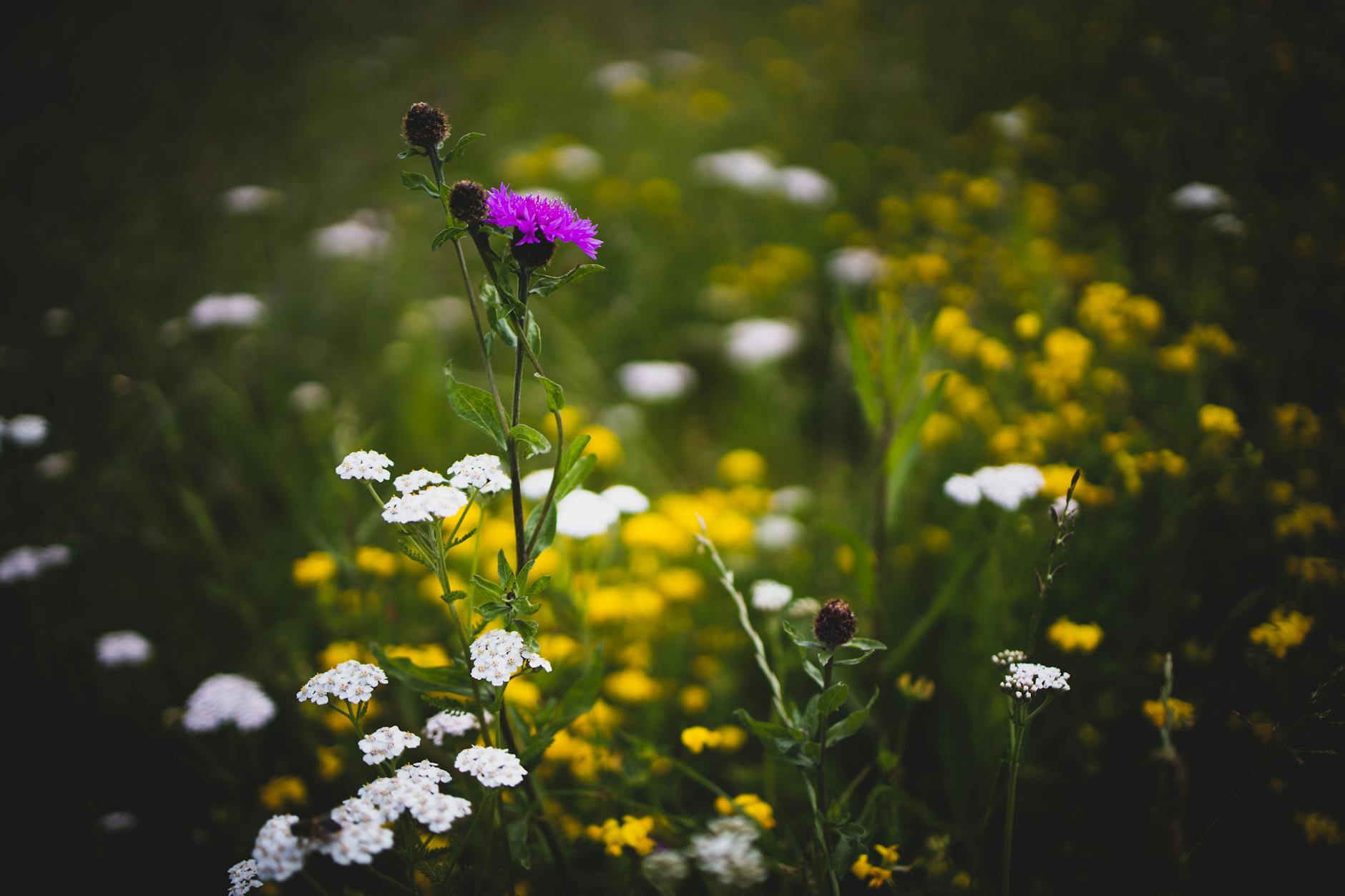
An equanimous mind is a spacious mind…

Equanimity was the last session in the four week series on the brahmaviharas I led recently. All week, I held equanimity in the back of my mind, trying to settle into the flavor and balance of equanimity. Sometimes, equanimity appeared to have a calm abiding quality to it – like the peacefulness of going with the flow, knowing you are safe and going to be OK. One of the days of the week, the roof of our classroom started to leak. The students took it in their stride. The custodians appeared in minutes to fix the leak at least temporarily. I was struck by the presence of equanimity. Roof, Leak, No Problem! My students seemed so positive, it felt like they knew that we would get through it together.

At other times, equanimity seemed to have a grounded quality – still like the mountains and able to move easily like the branches of the trees in the wind, even as they wore their changing colors that would soon fade. We went on a hike that weekend and I remembered Joseph Goldstein’s words in a recent talk: “Whatever has the nature to arise will also pass away…”. On that late afternoon, it was so clear that the leaves were falling. The current in the stream was moving. So were the clouds and for a moment, it appeared that the entire mountain was shimmering.

I was touched by the beauty of impermanence and the ability of awareness to hold it without turning away. My daughter was with me and I was struck too by the fact that she too was born and therefore of the nature to change, transform and eventually move away. It made this moment that much more poignant and precious!
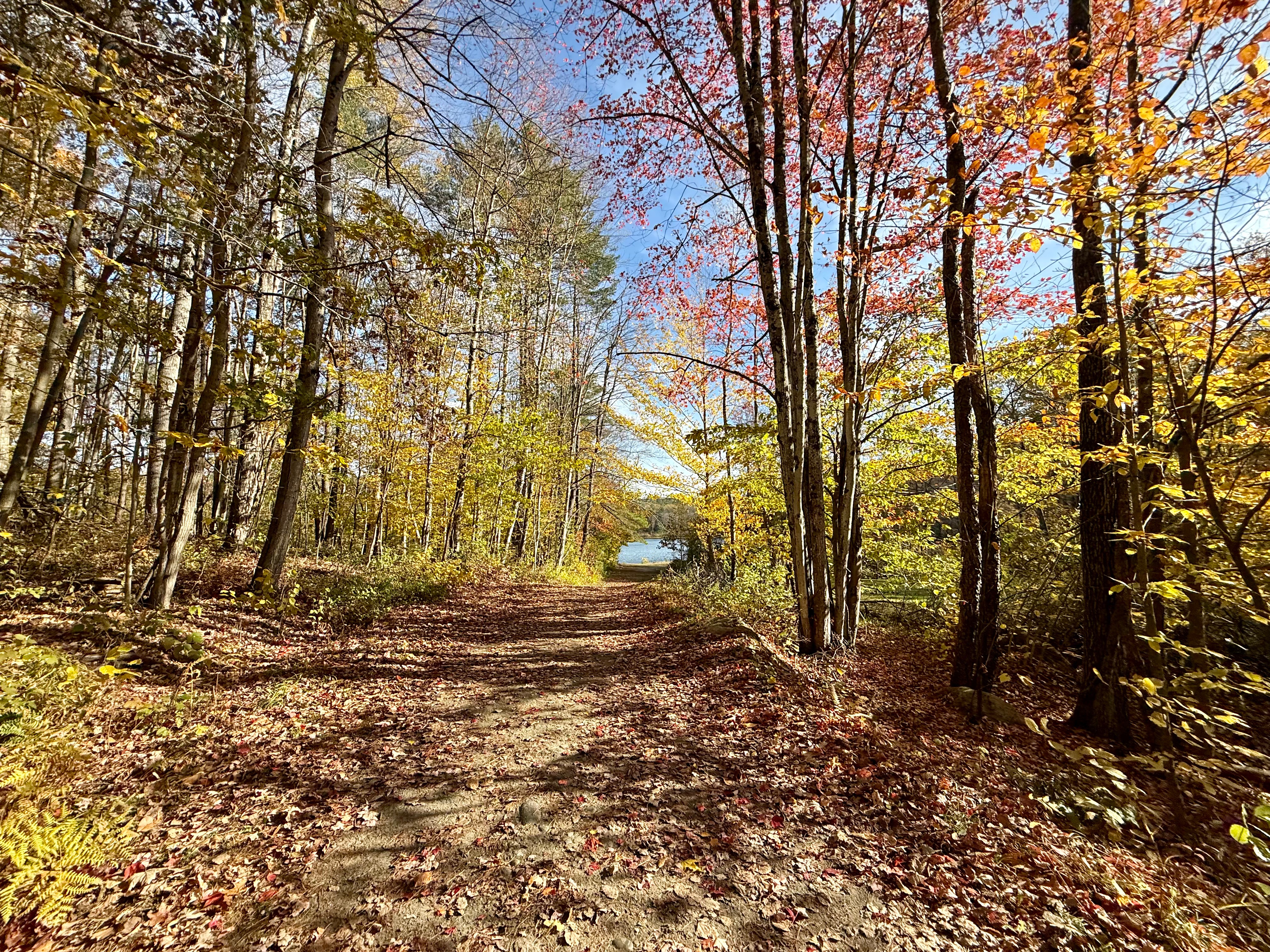
At other moments, equanimity appeared empty – arising when the conditions were right. Not mine, not something I could force, but more of an invitation to drop into, that was becoming more available, as I was becoming more available to equanimity. This too felt right – equanimity was of the nature to arise and there pass away. It made non-clinging more possible in the present moment. How can we hold on to something that is empty of inherent existence?

And then the times when equanimity seemed so full of kindness; a caring that was steady and could open without turning away or shutting down. Other times, equanimity was simply a space empty of any greed, hatred or ill-will. A deep settling into a place of non-contention that we call peace.

Wisdom tells me I am nothing. Love tells me I am everything. And between the two, my life flows…

-Nisargadatta Maharaj

We can appreciate this equanimous mind when it is present and that in itself conditions future such moments of equanimity to arise. In this way, we are sowing the seeds of mindfulness and kindness and when the conditions are right, these can bloom into the beautiful flowers of compassion, wisdom and equanimity.

So many flavors of equanimity…As you pause and reflect on your own experience with equanimity, what comes up for you? I would love to hear from you.

May your mindfulness continue to grow and may you experience many moments of equanimity and joy!

With care, Shuba
Exploring Stillness: Why We Meditate…

I have recently returned from a three week trip to India to visit with family and friends. In one of my meetings with an old friend, my friend told me that he was curious about meditation and why it worked… Paraphrasing his question, what I heard was: Why do we meditate? How does a simple act of sitting in silence lead to such transformation? Why does stillness lead to insight?

It is hard to describe meditation to a non-meditator, but I will give it a try. We all have ways in which we experience stillness – a quieting of the mind’s chatter and a settling into a deeper sense of peace. Perhaps for some of us, it is being in nature, going for a walk or those moments when we encounter something larger than our-selves and we are in awe.

In meditation, we train to connect with this stillness, this sense of deeper peace and well being in an ongoing way. A simple act of sitting (walking, lying down or standing: the four postures mentioned by the Buddha, for sustaining mindfulness) is really an invitation: inviting the mind to settle. As the mind settles, it is like mud settling in a pond, leaving clear water – one in which you can see all the way through. And we start to see our habitual patterns, the ways in which we operate in the world, and the stories and perceptions that shape our reality. And we start to see these gaps in the reality we have constructed for ourselves through the stories. The stories, the thoughts, the perceptions start to feel less solid, less personal and less enticing.

And as the mind’s grip on these loosen, something so incredible starts to happen: we start to drop our stories and start to show up for our experience without all the expectations and ideas that are habitual. The comparing, judging and fixing aspects of the mind quiet down and the wisdom of the heart starts to emerge…

And the heart has this amazing, innate capacity to be awake, present, compassionate, steady… the heart can step out of the habits of the mind and the heart can be with discomfort and pain without turning away. As our meditation practice grows, our trust in this capacity of the heart to respond with wisdom increases.

At some point, we hit some snags mostly created by the mind: ideas of what meditation should look like, what peace should feel like and some wanting to control our reality by getting rid of what is difficult. This is where wise spiritual friends and a teacher can be so helpful: to remind us that like everything else, these ideas too are to be released. To remind us to lean into what brings us suffering, and to explore what it is like to let go and experience freedom. This further deepens our practice and this awareness, inseparable from love, ebbs into all parts of our lives so that increasingly our life itself becomes a meditation on attuning to emergence…

That is why I sit in meditation every morning… and I can’t help but think of Mary Oliver’s words…

Meditation is old and honorable, so why should I
not sit, every morning of my life, on the hillside,
looking into the shining world? Because, properly
attended to, delight, as well as havoc, is suggestion.
Can one be passionate about the just, the
ideal, the sublime, and the holy, and yet commit
to no labor in its cause? I don’t think so.

All summations have a beginning, all effect has a
story, all kindness begins with the sown seed.
Thought buds toward radiance. The gospel of
light is the crossroads of — indolence, or action.

Be ignited, or be gone.

-Mary Oliver, What I have learned so far

May we sow seeds of kindness and may we tend to the wisdom of our hearts…

With love, Shuba

Reflecting on Lineage in Meditation Practice…

Photo by Irina Iriser on Pexels.com

Recently, an aspect of practice that has been helpful to me has been reflecting on lineage. This has been true both in my personal practice as well as professional life. As an educator, I’ve been very aware that I’m following in the footsteps of countless wise educators before me. Similarly, in my meditation practice, I’ve been very aware of the fact that I’m following in the footsteps of those who have walked this path for thousands of years before me.

In a recent group with dharma friends, we were reading one of the middle length suttas (MN 100) in which we came across the story of Dhananjani, who tripped and expressed spontaneously homage to the Buddha, the awakened one. I have chanted this traditional homage so many times – and this was once chanted by Dhananjani too – in a different place at a different time! In that moment, I felt this incredible connection with Dhananjani – one that transcended space and time.

When we reflect on our lineage, on those who have supported us, and have walked the path before us, and with us, we feel ourselves belonging to something larger than a small self. A spaciousness opens up, this tremendous felt sense that we are not alone. A touch of awe for all the causes and conditions that have brought these practices to us. And a commitment to practice not just for our benefit but the benefit of others as well.

And this awareness can support us in those difficult moments when wisdom feels elusive: maybe it is elusive to the small self but not to this large spacious awareness that has the voices of all the practitioners before us. The love, the wisdom, the compassion increasingly becomes available to us because we too belong. We belong right here, in this moment, with all our struggles, hopes and despairs, joys and triumphs, pain and loss. And we are not alone. We can surrender more easily our agendas and stories into this vast loving presence that is empty of self. Rumi says this eloquently:

I saw you and became that empty.
This emptiness, more beautiful than existence,
it obliterates existence, and yet when it comes,
existence thrives and creates more existence.

So we can turn our attention towards this existence that has humility, gratitude and tenderness. Turning our attention towards what nourishes us and sustains us is wise effort – and we know that where we place our attention matters. It does not mean we deny what is difficult or challenging. But there is just a bit more space – for ease, belonging and connection with the present moment.

So the journey goes on,
and no one knows where.

Just to be held by the ocean
is the best luck we could have.
It is a total waking up.

Why should we grieve that we have been sleeping?
It does not matter how long we have been unconscious.

We are groggy, but let the guilt go.
Feel the motions of tenderness around you.

-Rumi

May you feel the motions of tenderness around you and may many blessings continue to unfold in your life!

With love, Shuba.

ps: And if you are interested in practicing with me, consider joining me for the upcoming mindfulness session this Saturday. You can find details here.

Awakening Beauty, Peace, and Freedom in Ordinary Moments | Mindfulness Practice

Photo by Fabien Burgue on Pexels.com

So much of our life is filled with ordinary moments. Like waking up. Brushing our teeth. Having breakfast. Going for work. Grocery shopping. Walking in the neighborhood. Talking to friends. Reading a book. Do these ordinary moments have the potential to wake us up to beauty, peace and freedom? This inquiry has guided most of my life and practice these past few years.

In my experience, mindfulness is very much flavored by kindness and caring. We pay attention because we care and vice versa. The Buddha talks about metta (loosely translated as friendliness or kindness) as an abiding/quality/recollection that:

“Whether standing or walking, seated or lying down
Free from drowsiness,
One should sustain this recollection.
This is said to be the sublime abiding”.

-Buddha (in Karaniya Metta Sutta)

So this practice of mindfulness/insight meditation/clear seeing is very much about being present and wakeful in every part of our day. And especially in noticing the every day moments of ease, joy and wonder and turning towards what is wholesome.

In Buddhism, it’s considered appropriate and helpful to cultivate and enhance our well-being. It is all too easy to overlook the well-being that is easily available in daily life. Even taking time to enjoy one’s tea or the sunset can be a training in letting in well-being.

-Gil Fronsdal, Tricycle, 2022

The urgency in my own practice has arisen from wanting to be present for as much as possible of my daughter’s childhood. First when she was an infant, then a toddler, a preschooler, and now – a teen. She inspires me to practice every day. Talking about mindfulness isn’t the same as practice! It becomes very clear when I am with her. Am I walking the walk? Am I present when she shares her worries and fears? When she shares her joys and excitement? What is the quality of attention? Is there kindness? And am I present for the ordinary moments – of walking alongside her and getting a glimpse of the world through her eyes.

It turns out it doesn’t matter why we practice – because slowly our brains start to rewire. The urgency I felt to be awake in her presence spread to others. My time with my beloved too was precious. So was my time with my students, with my parents, my friends, my colleagues and those around me. How I showed up for others mattered. How I showed up for myself mattered.

And that is the magic of mindfulness – these new neuronal pathways that are created simply by paying attention – they make it possible for us to wake up and see clearly the truth of the way things are. Life is impermanent. There is joy. Peace is possible. On this day, in this moment, right here, right now. We just need to show up for it!

With love, S.