Coming home: a practice for the new year…

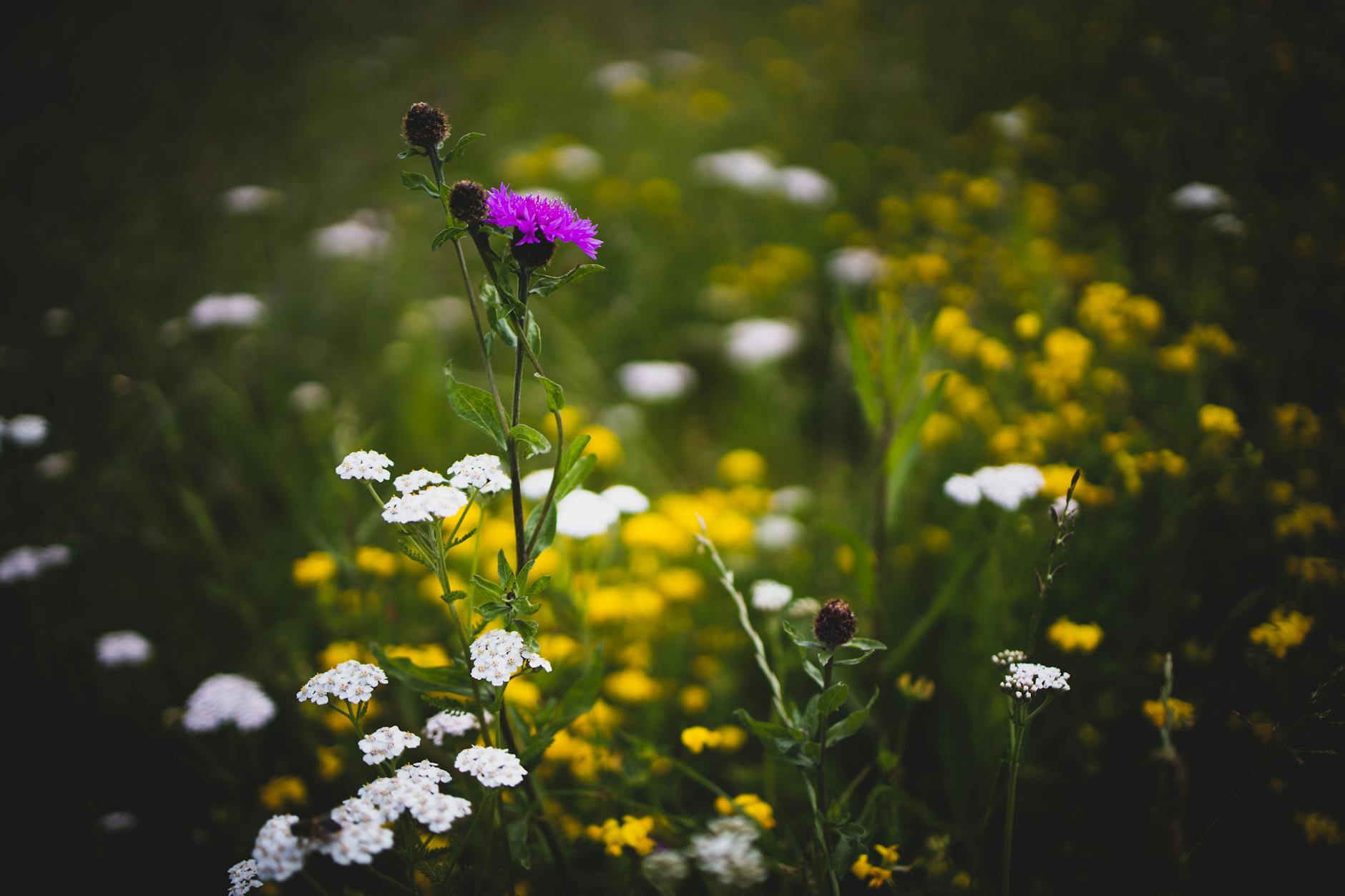
Photo by Sindre Fs on Pexels.com

In the buddhist circles, often at the beginning of a retreat or meditation, a new year or new cycle, we chant the three refuges. With the three refuges, we take refuge in the Buddha, the Dhamma and the Sangha. Taking refuge in the Buddha is about coming home to the the awakened one within ourselves. Refuge in the Dhamma is about coming home to the deepest truths of the way things are. And refuge in the Sangha is about coming home to the community that sustains us, nourishes us and supports us in moving towards freedom. Most days, in my evening prayer, after lighting the candle, I use the three refuges to help ground me and remind me of why I practice and what is important and how to show up for my life.

I’m struck by this practice of coming home, especially at the turn of this new year. This practice of coming home is essentially what mindfulness is: coming home over and over again to the here and the now. For, this present moment is where the possibility of freedom is, the transformative power of love is. In a new translation of Rumi given to me by a dear friend, the first verse in the first poem in the book (Gold, translated by Haleh Liza Gafori), says:

“Let Love

the water of life,

flow through our veins”

-Rumi

In coming home, we return to this source, this love, this awareness which includes everything. The difficult and sublime thoughts, the aches and pains, the heartbreak, irritations, anger, sadness, grief as well as the joy, peace, ease, delight and enjoyment. And everything in between. This space has tremendous tenderness, aliveness, wisdom, intuition and grace. When we start to sense into this mystery – that nothing is separate from this flow of life, of love, of light, there is only one way to live: with compassion and kindness. To appreciate the gifts of each day. To allow ourselves to drop our armoring and be touched by life, by beauty and by gratitude.

May this new year allow you to come home and find many moments of peace and joy!

With love, S.

Awakening Beauty, Peace, and Freedom in Ordinary Moments | Mindfulness Practice

Photo by Fabien Burgue on Pexels.com

So much of our life is filled with ordinary moments. Like waking up. Brushing our teeth. Having breakfast. Going for work. Grocery shopping. Walking in the neighborhood. Talking to friends. Reading a book. Do these ordinary moments have the potential to wake us up to beauty, peace and freedom? This inquiry has guided most of my life and practice these past few years.

In my experience, mindfulness is very much flavored by kindness and caring. We pay attention because we care and vice versa. The Buddha talks about metta (loosely translated as friendliness or kindness) as an abiding/quality/recollection that:

“Whether standing or walking, seated or lying down
Free from drowsiness,
One should sustain this recollection.
This is said to be the sublime abiding”.

-Buddha (in Karaniya Metta Sutta)

So this practice of mindfulness/insight meditation/clear seeing is very much about being present and wakeful in every part of our day. And especially in noticing the every day moments of ease, joy and wonder and turning towards what is wholesome.

In Buddhism, it’s considered appropriate and helpful to cultivate and enhance our well-being. It is all too easy to overlook the well-being that is easily available in daily life. Even taking time to enjoy one’s tea or the sunset can be a training in letting in well-being.

-Gil Fronsdal, Tricycle, 2022

The urgency in my own practice has arisen from wanting to be present for as much as possible of my daughter’s childhood. First when she was an infant, then a toddler, a preschooler, and now – a teen. She inspires me to practice every day. Talking about mindfulness isn’t the same as practice! It becomes very clear when I am with her. Am I walking the walk? Am I present when she shares her worries and fears? When she shares her joys and excitement? What is the quality of attention? Is there kindness? And am I present for the ordinary moments – of walking alongside her and getting a glimpse of the world through her eyes.

It turns out it doesn’t matter why we practice – because slowly our brains start to rewire. The urgency I felt to be awake in her presence spread to others. My time with my beloved too was precious. So was my time with my students, with my parents, my friends, my colleagues and those around me. How I showed up for others mattered. How I showed up for myself mattered.

And that is the magic of mindfulness – these new neuronal pathways that are created simply by paying attention – they make it possible for us to wake up and see clearly the truth of the way things are. Life is impermanent. There is joy. Peace is possible. On this day, in this moment, right here, right now. We just need to show up for it!

With love, S.

Opening to what is…

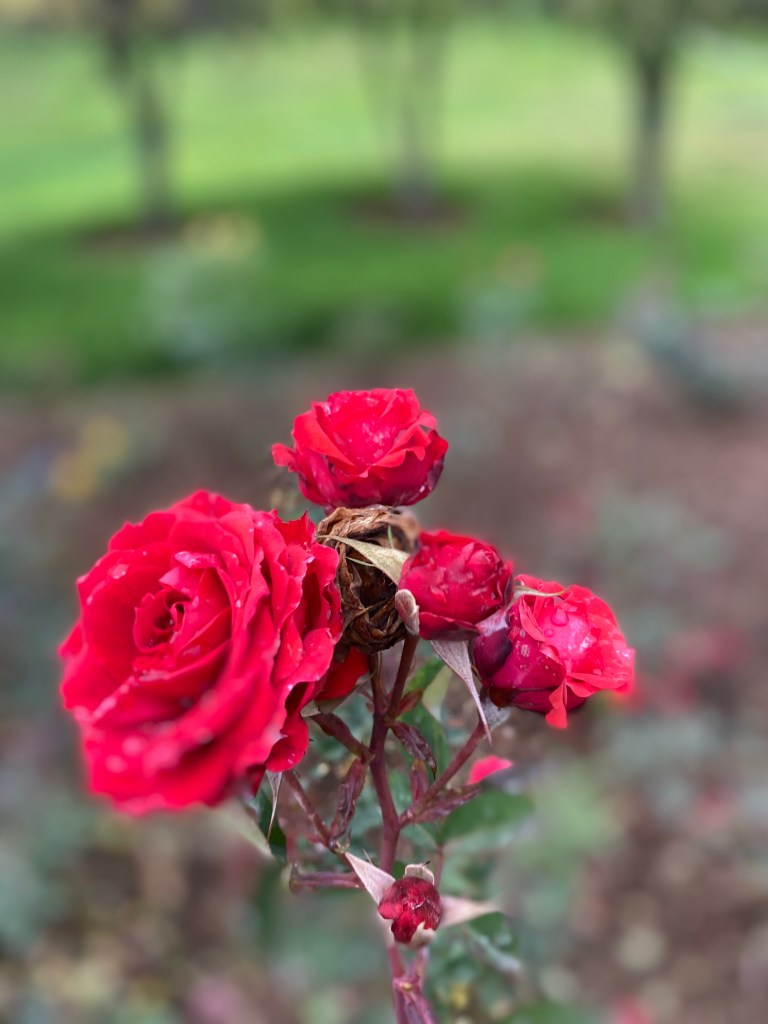
Taken in Ooty, Rose Gardens, July 2023

I’m writing on my last day here in India, where I have been for the past three weeks or so – in Chennai, Mumbai, Ooty and back to Chennai. Returning to my home town after six years, it has been quite the trip.

Among the many experiences, what stands out for me is the kindness, the friendliness and care that has come through these past weeks. In meeting old and dear friends after many years, I have been touched by love and gratitude for having some incredibly awesome people in my life. In meeting relatives with whom I haven’t done a great job of staying in touch with, I have been touched by warmth, openness and generosity. And the kindness of everyday folks – the maids, the cook, the watchman, the ironing guy, the cab guy, the hotel staff, the temple folks, the shop keepers – it sure cracks the heart wide open like a coconut!

Sometimes, the stress of simply going from one place to another feels frustrating and at other times, the equanimity of those who do this everyday and manage to keep their cool is inspiring. Cows that wait patiently at the coffee house next to humans, monkeys that climb on tall trees waiting to sneak out your food, dogs on streets lazing in the heat and people who go about their way without complaints. How can I hold the contradictions in life with equanimity? That seemed to be the theme everyday here in India.

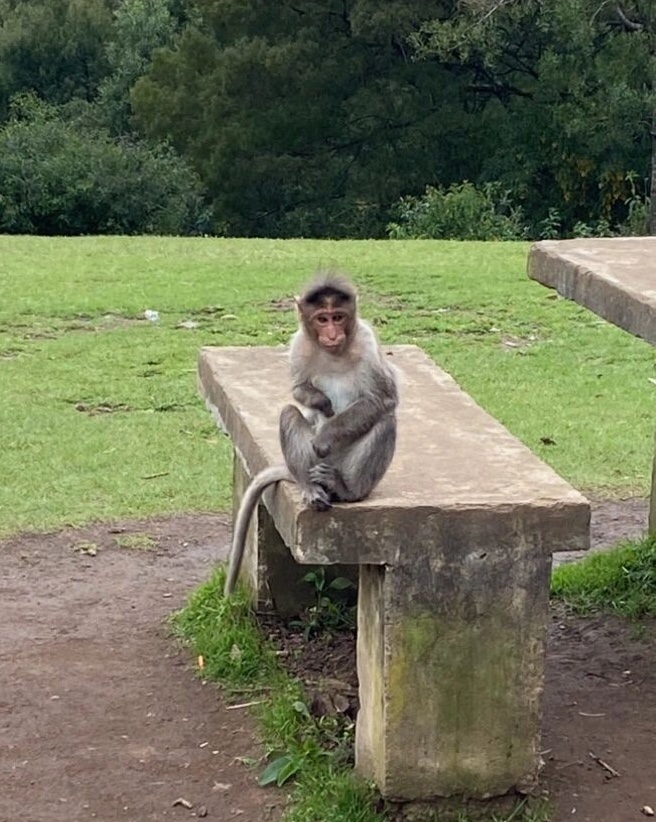
Taken in Ooty, Tamil Nadu, India

Among the sensory overload that is India, especially after a long time away, what I am most grateful for are three things. The first one is time with my family. I am grateful this was possible and that we could spend some quality time together, both at home and through travel and sightseeing. Eating my moms home cooked food was awesome and so special. I also enjoyed some amazing North Indian food at my in-laws and the celebratory South Indian meals at the functions I could attend during my time here.

The second thing I am grateful for is my meditation cushion. Seriously! It’s the first time I have traveled with my cushion and I almost removed it from the suitcase in lieu of carrying other things when my husband reminded me that I should stick to my plan. Having my cushion with me reminded me to sit everyday. To make time for my mind to settle, and to remember what was nourishing for my spirit. It was also deeply grounding amidst all the travel and it allowed me to stay connected to presence and remember to relax when possible.

The last thing I am grateful for is traveling with my daughter Anjali. A beam of light in my life and also light hearted, Anji rode the waves of change easily – whether it was new food or new place or new people. It was so fun to show her the hangouts that I went to as a child, to introduce her to new people including those who have known me since I was her age or younger, and to sleep with her in the same room that I slept with my grandma so many years ago…she is a continuum of the life that has flowed down through generations. And Anji moved between worlds with such ease and grace, it inspired me to hold my experience with lightness and let go of any expectations.

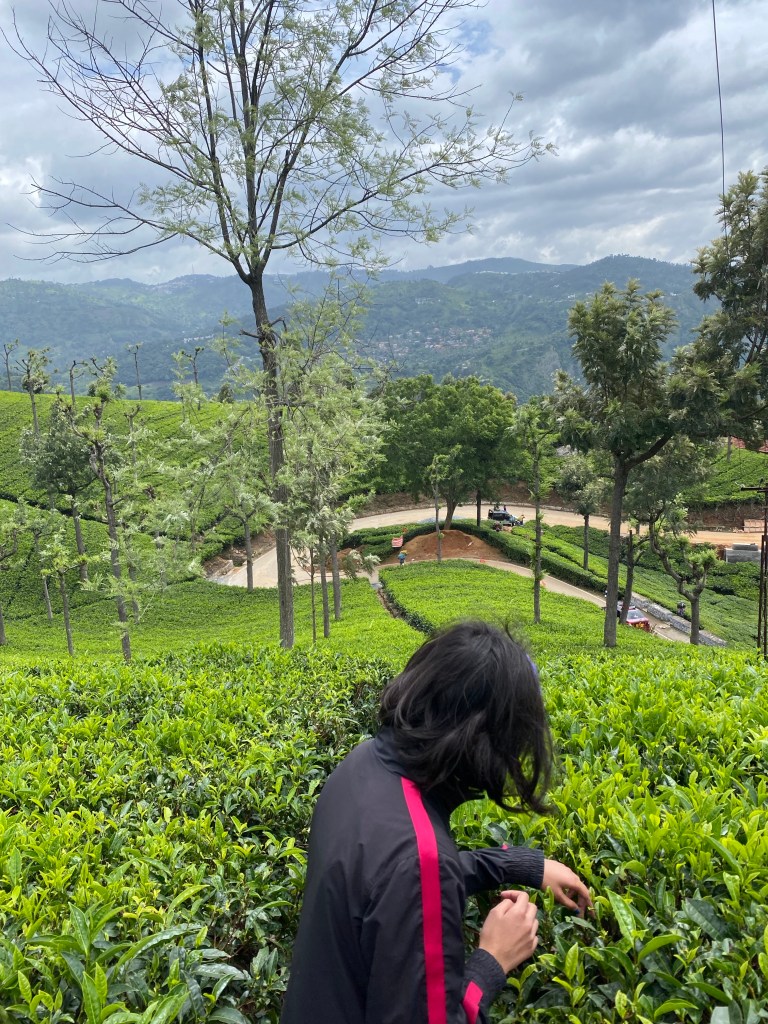
My daughter examining tea leaves in the Nilgiris hills.

So here I am – on my final day, my heart full of a mixture of emotions. Peace, thankfulness, joy and anticipation of returning home, sadness that I won’t see my parents and friends here for some time. It will perhaps be a year or two – and more things would have changed. But not everything. Not the care, the love and the deep friendships that are part and parcel of this place I grew up in.

With gratitude, S.

Welcome everything, push away nothing…

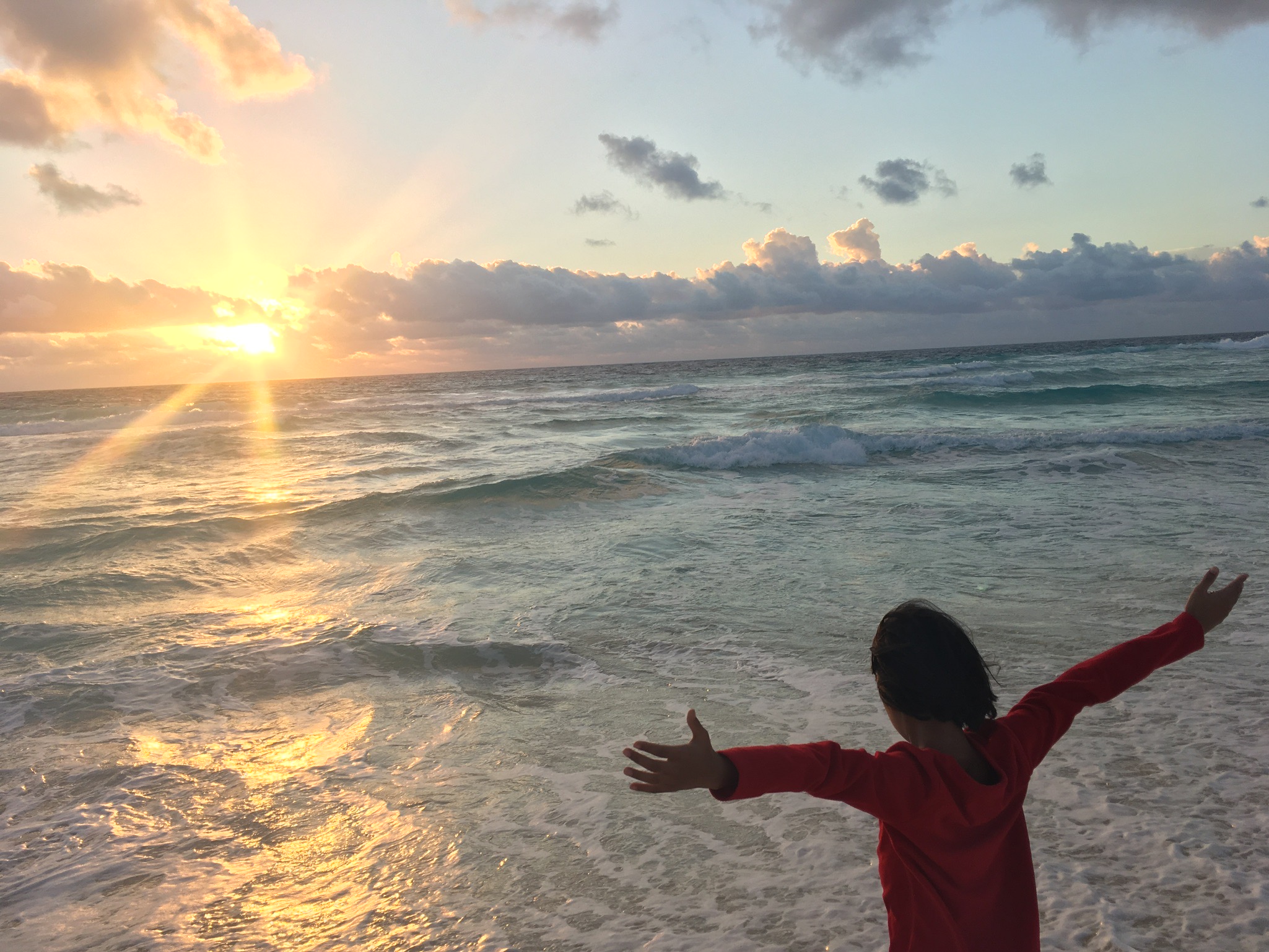
Daughter Anji on the beach in Cancun, 2018

After listening recently to a talk given by Frank Ostaseski, co-founder of the zen hospice project, I was inspired to read Frank’s book, ‘The five invitations‘. The second invitation in this book is to ‘welcome everything and push away nothing’, and it has been the theme of practice for me this past week.

School began this week in full swing and I held this intention on the opening day, to welcome everything, all my students and all the experiences. I found that it is easy to welcome everything when things are good! The first day was magical. The excitement, the hope, the possibilities.

With school beginning, there also came the familiar worry and anxiety of the virus, especially for my daughter Anji. The choice of masking and the dependence of her well-being on conditions outside her control. I was listening to her while washing dishes, feeling my own impatience as I was listening – when the invitation cut through. Welcome everything, push away nothing. This too was okay. I could welcome this and make space for it. I loved her and that also meant welcoming her tendency to worry.

With first full week of school, inevitably there was tiredness and feeling exhausted. And for me, with tired often comes judgment. I noticed how quick I was at self-judgment! Welcome everything, push away nothing meant that judgment too was okay. I could notice and listen to my thoughts with kindness and patience – like listening to a child who is hurt and wants attention. I was lying in bed early in the morning, wishing for more sleep, noticing the thoughts of ‘if only…’. And remembering the instruction, I could soften with tenderness and welcome the experience. And just like the child calms down when listened to, the kind attention was enough for the judgments and thoughts to release.

So welcome everything, push away nothing is really an instruction to accept things just as they are, not wishing them to be otherwise. Even when we wish them otherwise, there can still be kindness, instead of aversion. Gil Fronsdal talks about this in the third awakening factor of mindfulness, effort. Wise or skillful effort is in paying attention – not just what we pay attention to, but how we pay attention.

The dark thought, the shame, the malice,
meet them at the door laughing,
and invite them in.

Be grateful for whoever comes,
because each has been sent
as a guide from beyond.

Rumi

Choosing a welcoming, grateful and kind attitude strengthens this response so it becomes increasingly available in the future. And then we start to notice the exquisite joy, the beauty, the love, the abundance that comes our way when we welcome everything. It opens our hearts.

With kindness, S.

Abiding in loving-kindness…

Abiding in loving-kindness or metta has this slow flowering quality of opening our hearts. It doesn’t ask for us to be perfect, but simply that we are willing to aspire and practice to be unconditionally loved and loving.

As many of you know, I am drawn deeply by the ecstasy, joy, truth, contradiction and union in Rumi’s poetry. I love reading Coleman Barks’ introduction in his many books of Rumi poetry, about the story of how Rumi and Shams met and how their friendship began, outside of time. When Shams disappeared, Rumi journeyed and looked for him everywhere, until one moment, one day, he realized that Shams was within him. And out of that union came so many of his songs and poems celebrated throughout the world. As Rumi says, “when living itself becomes the Friend, lovers disappear.”

When I attended my first metta retreat with Michele Mcdonald back in 2008, it was my first taste of this unconditional love and friendship. In metta, we concentrate on phrases/wishes of well-being for our benefactor; not with the aim of controlling their happiness or well-being, but to gently ease into and abide into our own heart’s capacity to love and wish others well, independent of their accomplishments or qualities. We start with the benefactor, because this is our ‘easy’ person, the person for whom wishing well comes easily to us. As we practice, our hearts expand in friendship and good will and then it becomes easier to extend those wishes to ourselves, neutral and more difficult people, in that order. Ultimately, our aspiration is to wish all beings on earth this same unconditional good will and friendship, as we would wish for our dearest ones.

Being a parent offers a beautiful doorway to practice this metta journey. When I sit in meditation and begin with metta for my daughter, Anjali, it is easy to wish her well. Her sweet face fills my consciousness and brings me immense joy. Not because of her accomplishments or certain qualities she possesses, but simply because of who she is. A radiant being of light and joy, for whom my wishes of friendship, health, safety and love flow easily and naturally. When I abide in the love I feel for her, and slowly turn it like a mirror towards myself, this magical alchemy occurs. I too am worthy of the same love that I extend to my child. Sometimes I find myself wondering who is the mother and who is the child.

Moon and clouds are the same. Mountain and valley are different. All are blessed; all are blessed. Is this one? Is this two?” – Wu-Men.

This abiding in unconditional love and friendship is the state from which we can then act in the world. Can we extend that same unconditional love to difficult people in our lives? This is certainly more challenging but as we keep coming back to the practice, our heart slowly opens and learns to relate in a new way to others. Extending this good will does not mean we condone others’ unskillful actions. But it allows us to respond from a place of wisdom and grace, simply because we acknowledge that we are all human, imperfect and worthy of love, friendship and respect.

I cannot say that I can love all human beings the way I love my daughter. If I did, I would be an enlightened being. Instead, I am very much imperfect, impatient with myself, insecure at times, trying too hard, demanding at times. But in loving her, I am discovering a far greater capacity for love and healing than I ever thought possible. Always remembering patience and diligence. And that, as Daniel Mead puts it beautifully in his poem, “A flower cannot be opened with a hammer.

May all beings abide in this friendship and metta,

With love, S.

ps: Please note that all Rumi references in this post are translations by Coleman Barks. If you would like a recommendation of his poetry, my favorite is his book ‘The Glance’.