I get a poem-a-day from the poet Rosemerry Wahtola Trummer and these often make me pause and feel the truth of the moment. Here is the poem I received yesterday called ‘One Inward’ that seems so timely…
only when buffeted by the windstorm do I truly notice how still I can be
—Rosemerry Wahtola Trommer
Cultivating stillness and peace at times of chaos and upheaval may seem like a luxury or selfishness… and yet it is exactly at times like these that we need it the most! Stillness allows the agitation and reactivity in the mind to calm so that conditions for seeing clearly are cultivated, like preparing a garden for new growth. And from this seeing of suffering, change and non-self, wise action can emerge. This wise action can take many forms and many ways and can be deeply personal as well as collectively healing. As pointed to by spiritual teacher Ram Dass, ‘How can I help’ then becomes an attitude and practice, both internally and externally. This willingness to enter this process with humility, to be available for the present moment experience with an open heart, and to be touched by dukkha – this is practicing the practice!
Some practices to help support the cultivation of stillness can be found on my guided meditations page. I leave you with Thich Nhat Hanh’s words that never fail to inspire…
If we’re not calm, we can’t listen deeply and understand. But when our mind is calm, we can see reality more clearly, like still water reflecting the trees the clouds, and the blue sky. Stillness is the foundation of understanding and insight.
– Thich Nhat Hanh
May going inward support your ever expanding presence, kindness and healing!
Equanimity was the last session in the four week series on the brahmaviharas I led recently. All week, I held equanimity in the back of my mind, trying to settle into the flavor and balance of equanimity. Sometimes, equanimity appeared to have a calm abiding quality to it – like the peacefulness of going with the flow, knowing you are safe and going to be OK. One of the days of the week, the roof of our classroom started to leak. The students took it in their stride. The custodians appeared in minutes to fix the leak at least temporarily. I was struck by the presence of equanimity. Roof, Leak, No Problem! My students seemed so positive, it felt like they knew that we would get through it together.
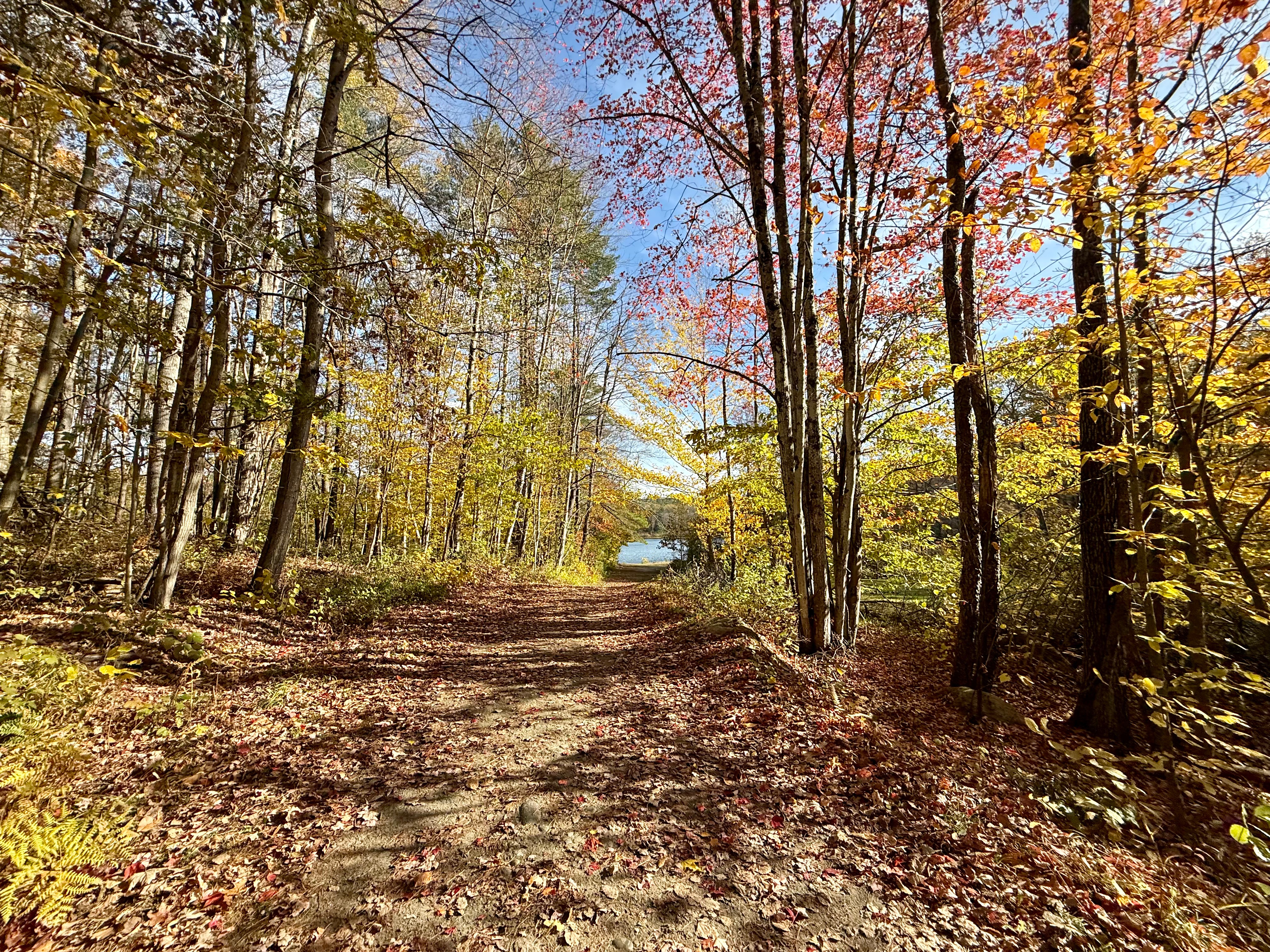
At other times, equanimity seemed to have a grounded quality – still like the mountains and able to move easily like the branches of the trees in the wind, even as they wore their changing colors that would soon fade. We went on a hike that weekend and I remembered Joseph Goldstein’s words in a recent talk: “Whatever has the nature to arise will also pass away…”. On that late afternoon, it was so clear that the leaves were falling. The current in the stream was moving. So were the clouds and for a moment, it appeared that the entire mountain was shimmering.
I was touched by the beauty of impermanence and the ability of awareness to hold it without turning away. My daughter was with me and I was struck too by the fact that she too was born and therefore of the nature to change, transform and eventually move away. It made this moment that much more poignant and precious!
At other moments, equanimity appeared empty – arising when the conditions were right. Not mine, not something I could force, but more of an invitation to drop into, that was becoming more available, as I was becoming more available to equanimity. This too felt right – equanimity was of the nature to arise and there pass away. It made non-clinging more possible in the present moment. How can we hold on to something that is empty of inherent existence?
And then the times when equanimity seemed so full of kindness; a caring that was steady and could open without turning away or shutting down. Other times, equanimity was simply a space empty of any greed, hatred or ill-will. A deep settling into a place of non-contention that we call peace.
Wisdom tells me I am nothing. Love tells me I am everything. And between the two, my life flows…
-Nisargadatta Maharaj
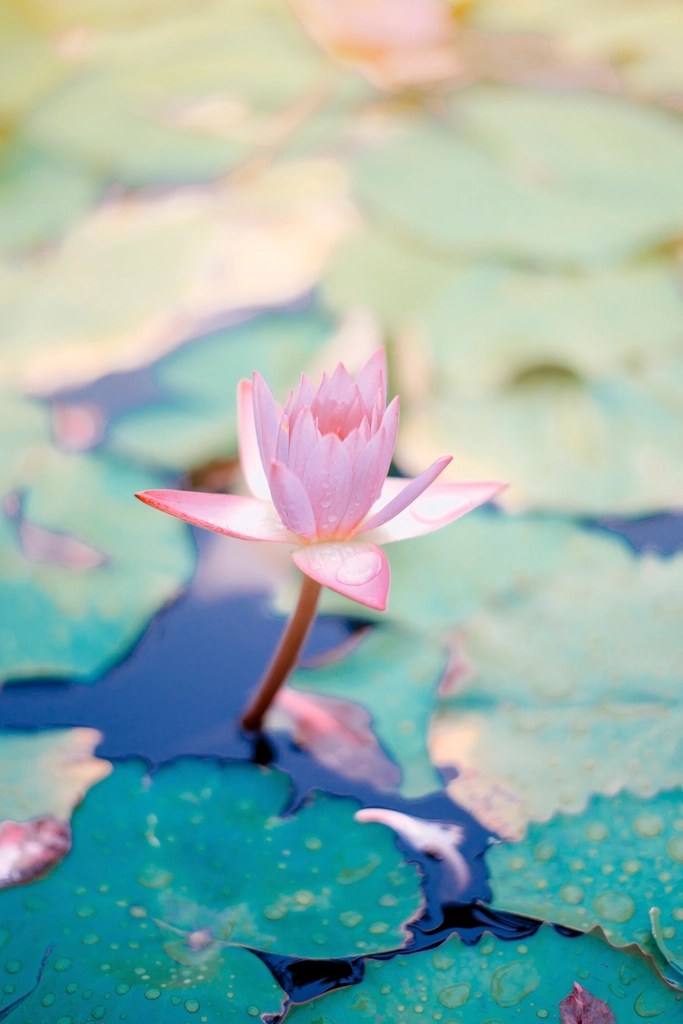
We can appreciate this equanimous mind when it is present and that in itself conditions future such moments of equanimity to arise. In this way, we are sowing the seeds of mindfulness and kindness and when the conditions are right, these can bloom into the beautiful flowers of compassion, wisdom and equanimity.
So many flavors of equanimity…As you pause and reflect on your own experience with equanimity, what comes up for you? I would love to hear from you.
May your mindfulness continue to grow and may you experience many moments of equanimity and joy!
I have recently returned from a three week trip to India to visit with family and friends. In one of my meetings with an old friend, my friend told me that he was curious about meditation and why it worked… Paraphrasing his question, what I heard was: Why do we meditate? How does a simple act of sitting in silence lead to such transformation? Why does stillness lead to insight?
It is hard to describe meditation to a non-meditator, but I will give it a try. We all have ways in which we experience stillness – a quieting of the mind’s chatter and a settling into a deeper sense of peace. Perhaps for some of us, it is being in nature, going for a walk or those moments when we encounter something larger than our-selves and we are in awe.
In meditation, we train to connect with this stillness, this sense of deeper peace and well being in an ongoing way. A simple act of sitting (walking, lying down or standing: the four postures mentioned by the Buddha, for sustaining mindfulness) is really an invitation: inviting the mind to settle. As the mind settles, it is like mud settling in a pond, leaving clear water – one in which you can see all the way through. And we start to see our habitual patterns, the ways in which we operate in the world, and the stories and perceptions that shape our reality. And we start to see these gaps in the reality we have constructed for ourselves through the stories. The stories, the thoughts, the perceptions start to feel less solid, less personal and less enticing.
And as the mind’s grip on these loosen, something so incredible starts to happen: we start to drop our stories and start to show up for our experience without all the expectations and ideas that are habitual. The comparing, judging and fixing aspects of the mind quiet down and the wisdom of the heart starts to emerge…
And the heart has this amazing, innate capacity to be awake, present, compassionate, steady… the heart can step out of the habits of the mind and the heart can be with discomfort and pain without turning away. As our meditation practice grows, our trust in this capacity of the heart to respond with wisdom increases.
At some point, we hit some snags mostly created by the mind: ideas of what meditation should look like, what peace should feel like and some wanting to control our reality by getting rid of what is difficult. This is where wise spiritual friends and a teacher can be so helpful: to remind us that like everything else, these ideas too are to be released. To remind us to lean into what brings us suffering, and to explore what it is like to let go and experience freedom. This further deepens our practice and this awareness, inseparable from love, ebbs into all parts of our lives so that increasingly our life itself becomes a meditation on attuning to emergence…
That is why I sit in meditation every morning… and I can’t help but think of Mary Oliver’s words…
Meditation is old and honorable, so why should I not sit, every morning of my life, on the hillside, looking into the shining world? Because, properly attended to, delight, as well as havoc, is suggestion. Can one be passionate about the just, the ideal, the sublime, and the holy, and yet commit to no labor in its cause? I don’t think so.
All summations have a beginning, all effect has a story, all kindness begins with the sown seed. Thought buds toward radiance. The gospel of light is the crossroads of — indolence, or action.
Be ignited, or be gone.
-Mary Oliver, What I have learned so far
May we sow seeds of kindness and may we tend to the wisdom of our hearts…
There is so much happening in this world right now that feels challenging to many of us. So much seems outside our control – and so much of what we believe in – equal rights for all, respect for each other, freedom to be ourselves – seems to be on the line. So how do we practice mindfulness at a time like this?
I can’t help thinking of words from Rumi:
Outside, the freezing desert night, This other night inside grows warm, kindling. Let the landscape be covered with thorny crust. We have a soft garden in here.
Along with the challenges. there is also so much beauty around us. For along with the ten thousand sorrows, we can also open to the ten thousand joys in life…We can choose where we place our attention. And as the saying goes, where the attention goes, energy flows. We can choose to linger in those moments where ease, beauty, wellness and contentment is available. The moments when we are lifted up by the kind words or smile of another or the warm embrace of a friend. The moments when generosity abounds and human spirit prevails. Moments when we are touched by awe and wonder – a sunset, the cracked ice on the pavement, the cloud formations, the sound of a bird call. And, we can choose to be kind.
Kindness is the language that we all need most right now. Individually and collectively – choosing to be kind to self and others, practicing forgiveness and letting go, remembering to pause and step back from the cycle of reactivity is what can help us bring authenticity, wisdom, compassion and love into this world. And we can begin with looking within ourselves. What are we holding on to? What can we let go of?
In Attadanda sutta (Sn 4.15, translated from the Pali by Andrew Olendzki), the Buddha says:
Seeing people locked in conflict,
I became completely distraught.
But then I discerned here a thorn
— Hard to see — lodged deep in the heart.
It’s only when pierced by this thorn
That one runs in all directions.
So if that thorn is taken out —
one does not run, and settles down.
So, what thorns can be discerned and released? What can be healed and nourished? And can we move in this world with kindness? May this inquiry serve us all and help us move towards freedom.



 A Space infused with loving-kindness...